 Written by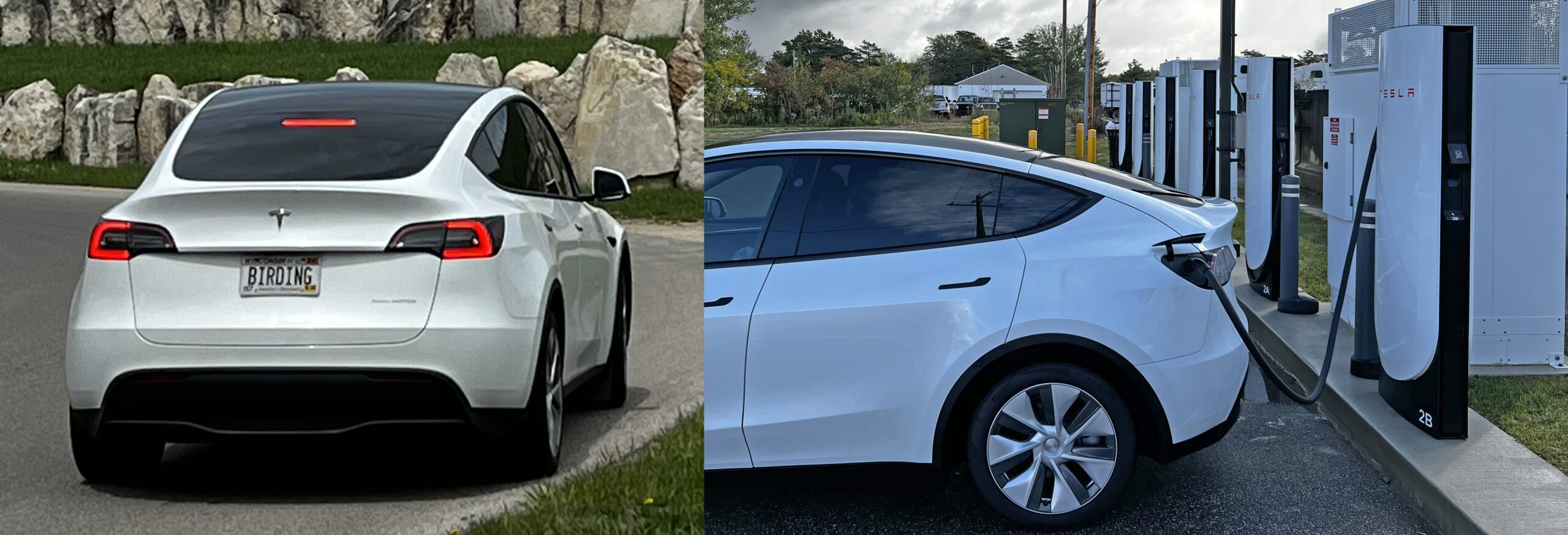
Support CleanTechnica’s work through a Substack subscription or on Stripe.
Or support our Kickstarter campaign!
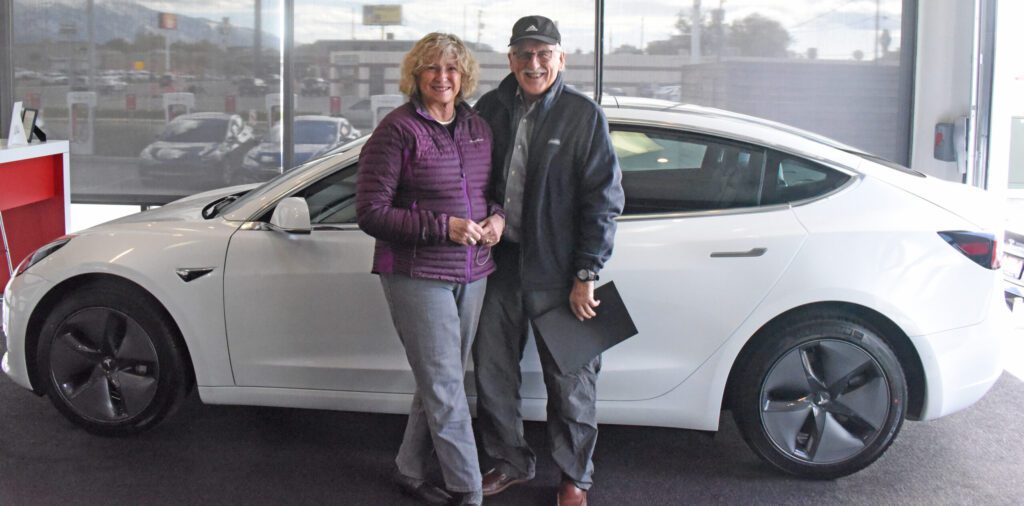
6 years and 3 months ago my wife and I took delivery of our new long range, dual motor Tesla Model 3, on October 21, 2019, at the Salt Lake City Delivery and Service Center. At the time, I paid $6,000 for what was called Full Self Driving (FSD). I was trading in my 3rd electric Nissan Leaf and wrapping the price of the car into a home re/fi at 3.5%, so it seemed wise to get everything I wanted at that time.
My odometer now reads 169,474 miles and I have driven my Model 3 from Utah to Wisconsin 6 times and driven it coast to coast visiting our daughter in North Carolina and friends in Palm Springs, California. Even though airplane manufactures have been calling their pilot assist systems autopilot for many years without challenge, Tesla was often criticized for using the term. Beyond that, Tesla has received no end of criticism for using the name Full Self Driving for something that is not perfect. They have been forced to now call it Full Self Driving Supervised. We are constantly bombarded with talk about Artificial Intelligence these days. Most of us have little exposure to using artificial intelligence. However, I am recently getting asked if I want to use ChatGPT (the most famous AI system) when I do a Google search. Even more recently I am told that the description of my University of Wisconsin Badgers basketball team’s most recent performance was generated by AI. However, FSD Supervised is the only example of a sophisticated AI system that I interact with regularly.
- Back in 2019, FSD would automatically navigate my car on interstate highways from on-ramp to off-ramp. It would also give me smart cruise (speed control) that would slow down for slower moving cars and stop my car at a stop sign or stoplight if a car was in front of me in my lane. It would also steer my car on roads that had at least two yellow lines in the center of the road, and slow down for curves. However, it would fail if the turns were sharp (e.g., a rotary). It would not navigate automatically on city streets.
- Over the last 6+ years, Tesla AI has dramatically improved. It is to the point where I can put an address into the NAV, drive out onto a road or city street, and it will drive me to a street address or into a big box store parking lot. It will sometimes do this without intervention. The steering assist will keep my car rock steady in the center of the lane on any street or highway. It will generally handle stop signs, stop lights with double lane left hand turns, sharp turns, rotaries, speed bumps, etc. properly. However, I seldom use its capability of parallel parking or summons in a big parking lot.
FSD Supervised v12.6.4, the latest version for my car, won’t drive my car out of my garage or back in. It won’t find a parking place in a big lot and park. It sometimes gets in the wrong lane at stop signs and stop lights (inconsistent with the navigation). It doesn’t slow down to 20 mph for the flashing lights at school zones. It also ignores the sharp dips in the road we have in Utah that will rattle your teeth if you don’t slow down. I intervene quite frequently when not absolutely necessary, but basically only where I prefer to drive differently. For example, it stops for a full second at stop signs where I would even do a rolling stop on occasion. Also, when exiting 12-lane I-15 from the center HOV lane across 6 lanes of traffic, I’m not confident that it will make it if the traffic is heavy.
- My car has Hardware V3, which includes a very powerful computer and 7 high-resolution cameras. Sometime in mid 2024, Tesla started installing Hardware V4 on all its new cars. It includes an even more powerful computer and higher resolution cameras. The new FSD Supervised V14 only runs on HW4 cars and has been getting rave reviews. Fewer interventions are required and it now does the third and final stage of AI driving, the beginning and end if your trip. It will now park and unpark your car in your garage and in a public parking lot.
Tesla is now offering “Robotaxi” rides with its cars in Austin, Texas, using FSD V14 with no driver at the steering wheel and only a supervisor in the right front seat with a kill switch.
We read a lot about massive data centers which are used to train AI systems and use massive amounts of electricity. Tesla has such a data system that has one of the largest computers in the world. Every Tesla feeds data into the computer, which Tesla uses to train (and improve) FSD. Also, whenever I am running FSD and intervene, my car asks me why? Then it gives me the opportunity to record a short verbal message as to why I intervened. This information is also used to train future versions of FSD.
I borrowed a new Model 3 running FSD v14.2 from my local Tesla Service Center recently and took it for a short test drive. The car was delivered to me using Summon! I haven’t used Summon because it hasn’t been reliable. According to my salesman, it is much improved with V14. The demo car managed to exit properly from I-15, moving over two lanes in fairly heavy traffic. It also waited until the last second but managed to get in the correct lane at a stop light where v12.3 fails regularly. I did intervene once when FSD v14.2 was going to wait a long time to turn left onto a busy street. When I returned the car to the Tesla service center, it neatly and accurately backed the car into a parking place with no instructions from me.
Below you see my brother’s 2024 Model Y that he took delivery of in December 2024. Sometime in mid-2024, Tesla started delivering cars with HW4 and soon started installing FSD 14. My brother reports dramatic improvements over his 2016 Model S running FSD 12.
Tesla’s FSD Supervised v12.4.3 running on my Model 3 is often incorrect. Tesla has continued to train FSD, and v14.2, as described above, is much more often correct. However, automobile driving needs to be better than more often correct. It needs to be significantly more perfect than human drivers before Tesla can use it everywhere for driverless taxis, before I can take a nap while my car drives me to my next stop or destination.
Visual Example on How Artificial Intelligence works and how it sometimes fails.
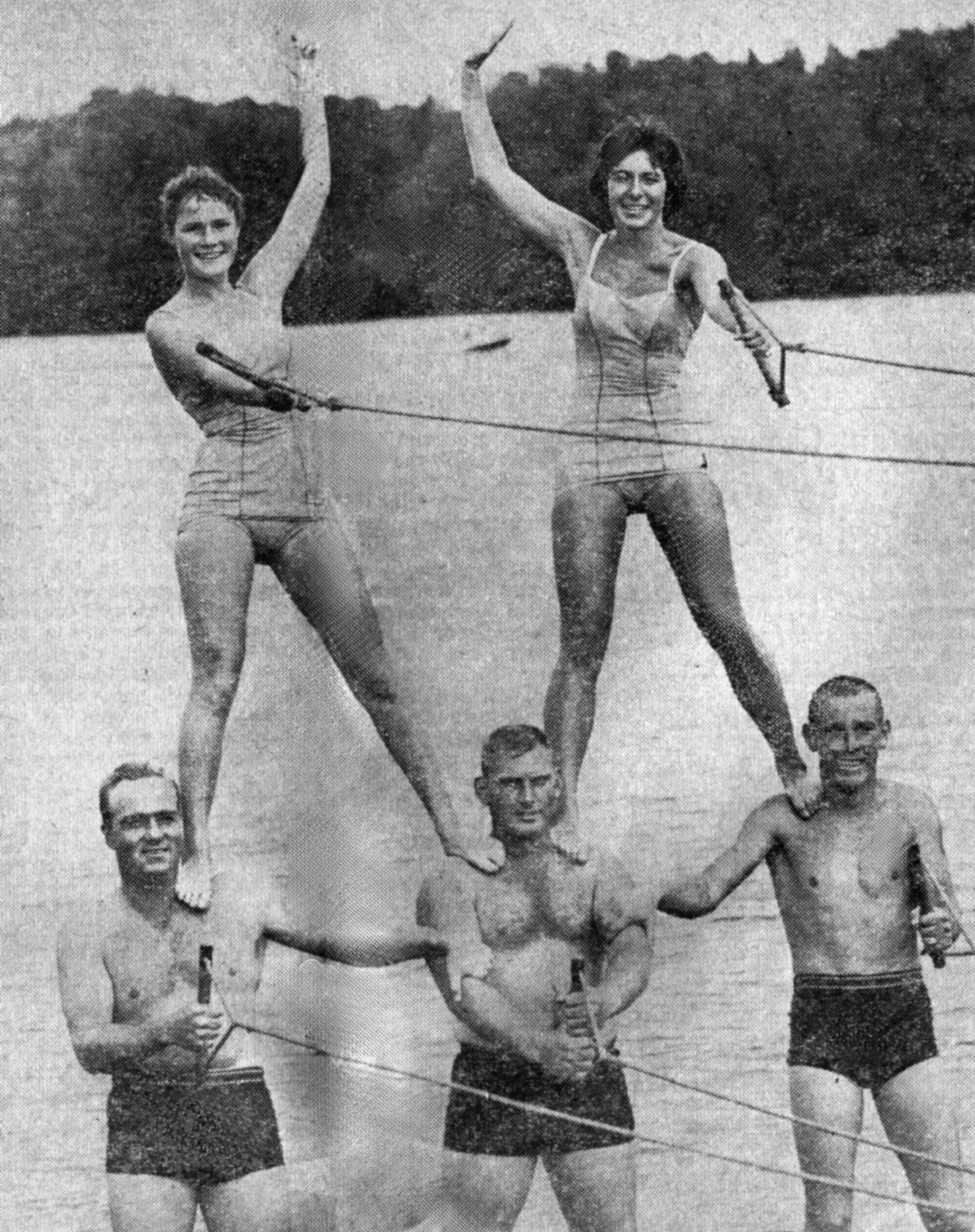
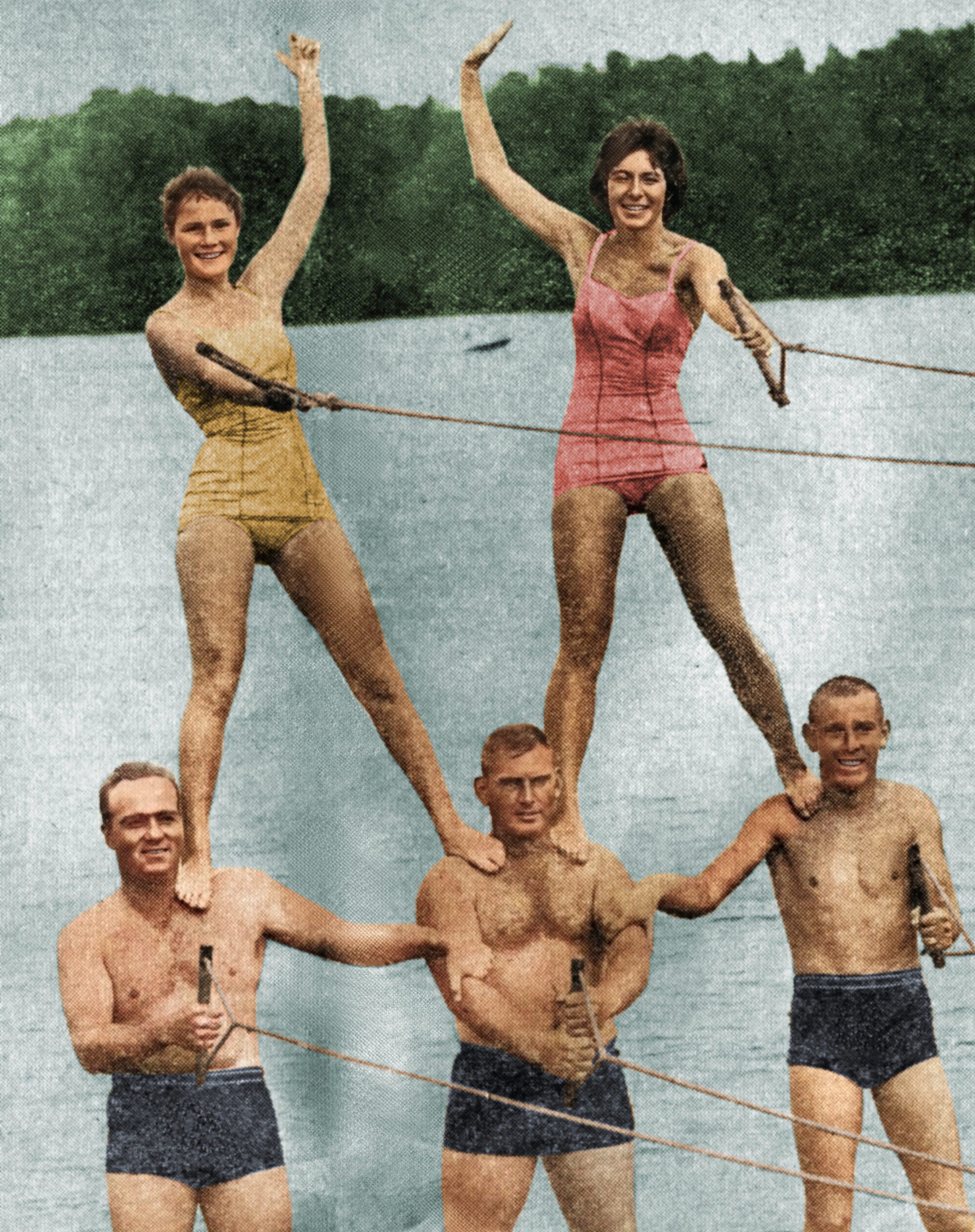
I have written several historical photo-biography books about my family and I am working on one about the 50-year history of the local water ski show team in Three Lakes, a small town in Northern Wisconsin where we spend our summers. Older photographs of my family and the water ski club are only available in black and white, and some are from quite low-quality newsprint like the photo below. Since the early days of photography, it has been the practice to have an artist colorize B&W images. Since color images have a greater impact than B&W images, I set out to have mine colorized.
Some time ago, I was made aware that my local camera store had a person who would colorize old B&W images using Photoshop. Below you see her colorization of my B&W image.
The professionally colorized version above maintains all the correct details of the original, but doesn’t have the spectacular “snap” of the ChatGPT version below.
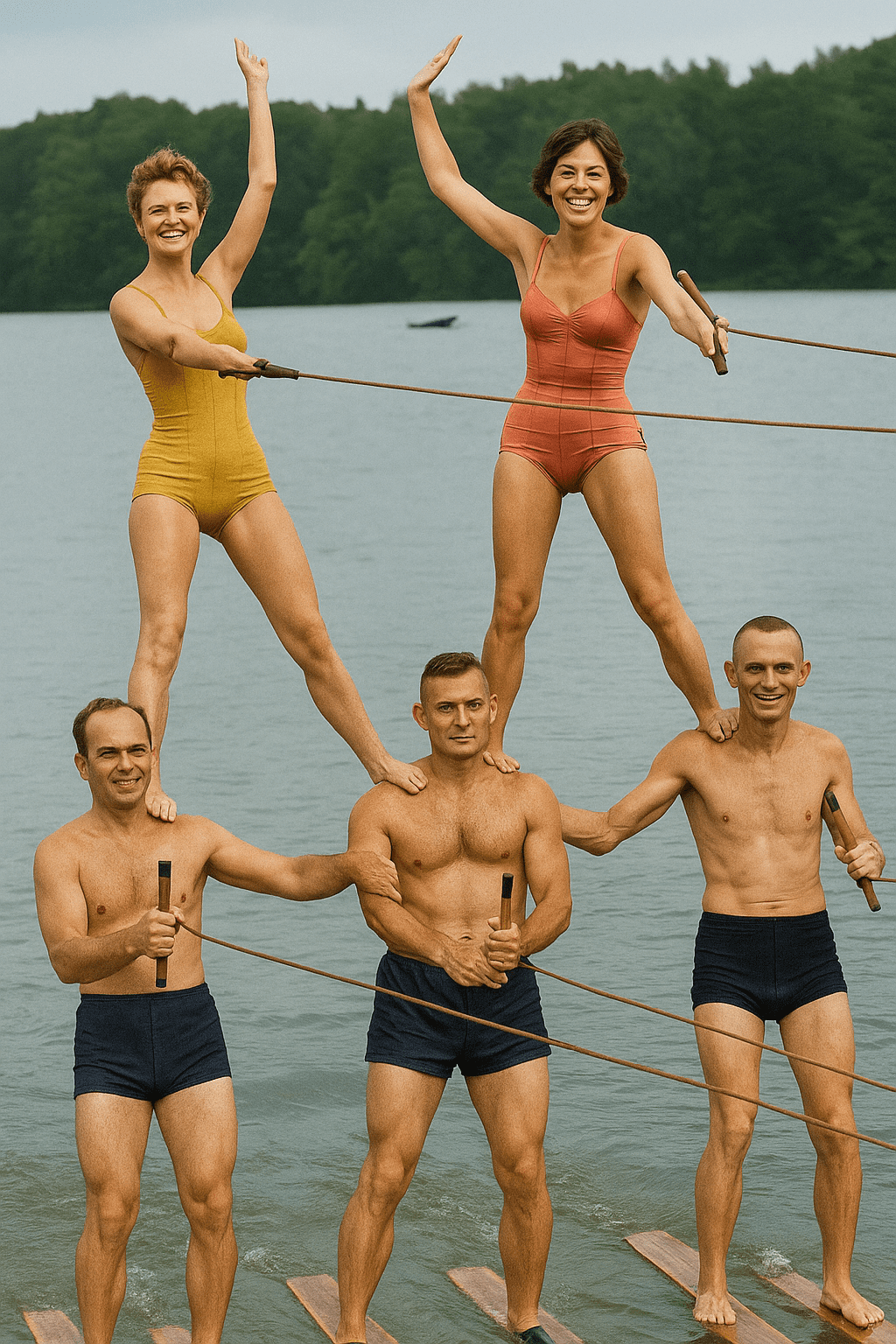
However, in this age of Artificial Intelligence systems like ChatGPT, it was the obvious choice to set one to work colorizing my B&W image as you see below.
Above, you see ChatGTP’s colorized version of my B&W photo. It’s spectacular! The bodies and swimsuits of the skiers are high resolution and the colors are vivid. The low-resolution newsprint artifacts have been totally replaced. However, on close inspection, what’s wrong with the ChatGTP version? 1) ChatGTP doesn’t know what a water ski handle is and has replaced them with something totally weird. 2) ChatGTP has invented water skis that were not in the original photo, but without the bindings skiers need to fasten them to the skis. 3) The skier on the right has his hand on the arm of the next skier, but ChatGPT puts his arm behind the skier. 4) The women on the left has clenched her fingers but ChatGPT has them straight. But 5) To me, the dealbreaker is that ChatGPT has replaced the skiers’ faces so that they are no longer recognizable.
Summary: ChatGPT has produced a spectacular colorized version of my B&W photo that I have included in my book. However, it has made enough mistakes that I had to include the professionally colorized version as well. In relation to the title of this article: AI is not Always Incorrect. A better substitution for the acronym would be Often Incorrect. I think the colorization of my B&W image by ChatGPT may give insight on the issues of training FSD. One can imagine that training ChatGPT on enough water ski images would teach it how to understand water ski handles. However, how could it ever be trained to maintain the correct facial characteristics? One could not hope to find enough images of these particular people for it to recognize and substitute high-resolution images of those people.
FSD Supervised v14 has been trained with billions of driving situations. It is a huge improvement from v12.6.4 running on my Model 3. However, I’m confident that the computer is powerful enough and the cameras are good enough on my Model 3 and the millions of us with HW3 that most of the v14 features could be implemented on our cars. Is Tesla holding off on us so that we will buy new cars? But the real $64,000 question is: Will training FSD on billions of additional driving situations make it good enough that it will no longer need to be supervised?
Referral Program: If you find any of my articles helpful to you and you are buying a new Tesla, please use my referral link: https://ts.la/arthur73734 (be sure to use it when you make your order). If you are buying a new Tesla and use my link, you’ll currently receive $1,000 off the purchase price of a Model S or X or Cybertruck, or 3 months of complimentary FSD with a Model 3 or Y.
Support CleanTechnica via Kickstarter
Sign up for CleanTechnica’s Weekly Substack for Zach and Scott’s in-depth analyses and high level summaries, sign up for our daily newsletter, and follow us on Google News!
Have a tip for CleanTechnica? Want to advertise? Want to suggest a guest for our CleanTech Talk podcast? Contact us here.
Sign up for our daily newsletter for 15 new cleantech stories a day. Or sign up for our weekly one on top stories of the week if daily is too frequent.
CleanTechnica uses affiliate links. See our policy here.
CleanTechnica’s Comment Policy
Source link by CleanTechnica Reviews Archives
Author Arthur Frederick (Fritz) Hasler
#Artificial #Intelligence #Incorrect