
 Written by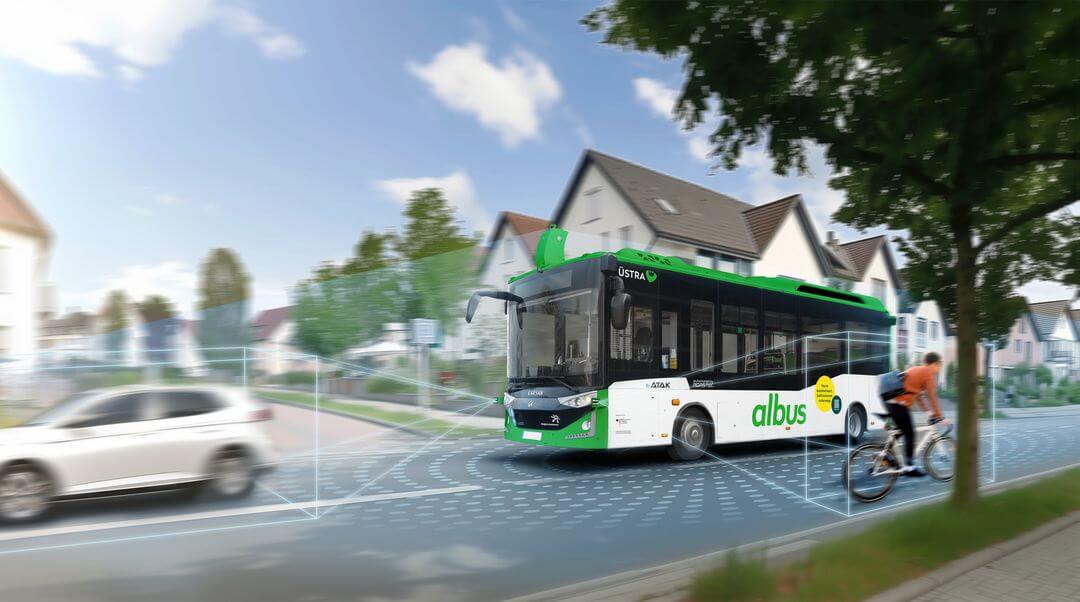
Infrastructure investment, the financing of the Deutschlandticket, the electrification of bus fleets, the sector’s path toward automation and digitalisation.
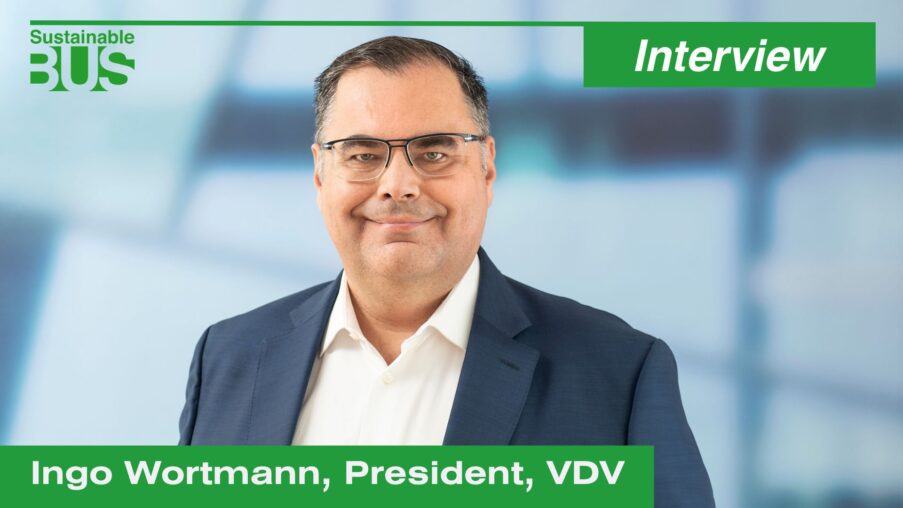
Ahead of Mobility Move 2026, set to take place in Berlin from 10 to 12 March, Sustainable Bus spoke with Ingo Wortmann, President of the German Public Transport Association (VDV) about the key challenges facing Germany’s public transport sector.
Public transport demonstrates that transformation is possible: nearly 5,000 locally emission-free buses – around ten percent of the entire city bus fleet, with the share growing dynamically – are already in operation in Germany. From 2030 onwards, 90% of newly procured city buses must be emission-free. The sector is technologically ready – what is missing is secure financing for the necessary investments. the focus must be on maintenance and operational performance – meaning refurbishment, digitalisation and energy infrastructure.
Ingo Wortmann, president, VDV
Ingo Wortmann on the support needed by public transport
According to the VDV Balance Sheet 2025, passenger numbers have increased only slightly, while costs – particularly for personnel – have risen significantly. What are the most important strategic priorities of the VDV to strengthen public transport in Germany?
The VDV’s strategic priorities are clear. First: modernise infrastructure and safeguard quality. Despite a slight increase in passenger numbers to 9.86 billion (+0.8%), further growth is being hampered by deteriorating infrastructure, vehicle shortages and excessive bureaucracy. The VDV is therefore calling for a swift public transport modernisation pact and a strengthening of the Municipal Transport Financing Act (GVFG) – with increased funding, continued support for fundamental renewal beyond 2030, and sustained investment in digitalisation and automation.
Second: stabilise financing – particularly for the Deutschlandticket. 14.6 million people use the D-Ticket. The product has gained broad acceptance – what is now required is long-term secured financing, a transparent price index and fair revenue distribution.
Third: safeguard productivity and staffing. Personnel costs have risen by 5%, while availability in driving services has declined. Good working conditions remain essential – but reforms and strong social partnership structures are equally necessary to maintain efficiency and operational performance.
In short: public transport needs reliable political framework conditions to sustainably strengthen mobility as a public service in both urban and rural areas.
Electrification alone is not sufficient. For an expansion scenario with at least 30% more passengers, an additional €3.36 billion per year will be required, including €500 million specifically for buses. More service means fewer cars – and therefore real emission reductions. To fully convert bus fleets by 2035, approximately €15.5 billion in federal funding will be required.
Ingo Wortmann, president, VDV
The VDV has supported the €500 billion infrastructure plan. At the beginning of 2026, the question arises: how should these funds be allocated to ensure long-term modernisation – particularly with regard to bus-related measures such as dedicated bus lanes and depot electrification?
The situation is clear: with 144.2 million tonnes of CO₂, the transport sector once again misses its targets, and by 2030 a gap of 169 million tonnes is looming. At the same time, public transport demonstrates that transformation is possible: nearly 5,000 locally emission-free buses – around ten percent of the entire city bus fleet, with the share growing dynamically – are already in operation in Germany. From 2030 onwards, 90% of newly procured city buses must be emission-free. The sector is technologically ready – what is missing is secure financing for the necessary investments.
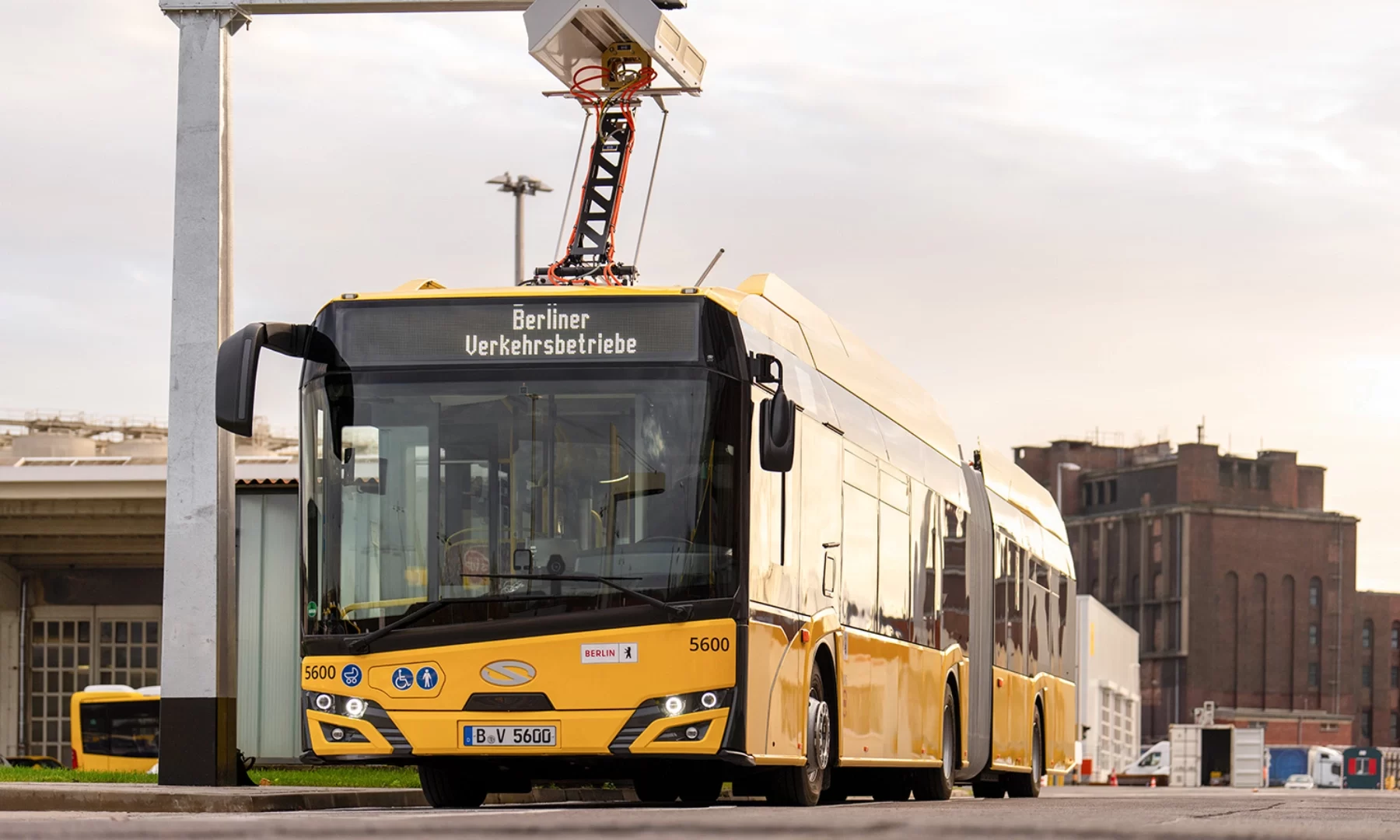
For the €500 billion infrastructure package to have a real impact, the focus must be on maintenance and operational performance – meaning refurbishment, digitalisation and energy infrastructure. The funds are already divided between the federal government, the Länder and municipalities. €300 billion is allocated to federally-owned infrastructure and cannot be used for buses. €100 billion flows into the Climate and Transformation Fund, which also finances support for zero-emission buses. These subsidies must now be stabilised and significantly increased. From the €100 billion share for Länder and municipalities, each federal state needs a dedicated and easily accessible funding stream for cities and municipalities in the bus sector. Dedicated bus lanes and priority measures immediately improve punctuality and productivity. Electrifying depots with high-capacity grid connections and charging infrastructure is a prerequisite for the propulsion transition.
At the same time, electrification alone is not sufficient. For an expansion scenario with at least 30% more passengers, an additional €3.36 billion per year will be required, including €500 million specifically for buses. More service means fewer cars – and therefore real emission reductions. To fully convert bus fleets by 2035, approximately €15.5 billion in federal funding will be required.
Tax, electricity, subsidies…
The reduction of electricity tax and the stabilisation of grid fees at federal level have eased operating costs for transport companies. At the same time, federal subsidies for vehicle procurement have declined significantly compared to previous years. Has the total cost of ownership (TCO) of battery-electric buses now reached a tipping point compared to diesel buses?
There is no simple yes-or-no answer – but clear trends are emerging. Lower electricity costs and stabilised grid charges improve the operational economics of battery-electric buses. Particularly with high mileage and well-planned depot charging, lifecycle costs (TCO) are approaching those of diesel buses – and in some individual cases the tipping point has already been reached.
At the same time, investment costs for vehicles, charging infrastructure and depot electrification remain significantly higher. If federal procurement subsidies decline, economic viability shifts further into the future again. In short: in some segments, the TCO tipping point is within reach – but not yet across the board and not without reliable funding and financing frameworks.
We are now in the second phase of the Clean Vehicles Directive, with a German procurement target of 65%. Are German transport companies truly prepared for this requirement? At the same time, ACEA is calling for a mid-2026 review of CO₂ standards for coaches and warns that the transformation process risks stalling due to inadequate framework conditions. How do you assess this development?
From the VDV’s perspective, the 65% target in the second phase of the Clean Vehicles Directive is fundamentally achievable – but not automatically and not equally everywhere. Many transport companies have made significant progress in switching to zero-emission buses. However, whether the quota can be met ultimately depends on framework conditions: sufficient funding, high-capacity grid connections, timely depot expansion and accelerated planning and approval procedures. Without reliable financing and reduced bureaucracy, the ramp-up will stall.
Against this backdrop, it is understandable that ACEA points to deficits in infrastructure and investment security. Particularly in long-distance and interurban coach transport, suitable technical solutions and charging infrastructure are not yet available nationwide. However, from our perspective, the response cannot be to question climate targets, but rather to consistently improve the conditions for implementation. The industry is ready – now policymakers must provide stable, long-term frameworks to enable predictable transformation.
The federal funding call for zero-emission buses in 2025 explicitly includes the retrofitting of conventional buses. How does the VDV assess the role of retrofit solutions in fleet transformation strategies?
Retrofit solutions are certainly an option. However, from our perspective in the bus sector, the investment ratio between new electrical systems and batteries and “old” buses with limited remaining service life is often not economically viable. The continued use of efficient diesel buses alongside new electric buses appears to be the most economically sound approach.
Recent studies project up to one million networked shuttle and bus vehicles in Germany in the long term to build a nationwide attractive system. In such a public-service scenario, urban road traffic could decrease by up to 11%, while public subsidies could fall by around 20% despite expanded services – due to efficiency gains and higher fare revenues.
Ingo Wortmann, president, VDV
The goal is seamless mobility
In order to achieve the EU’s 2030 climate targets: what role should new business models such as “Bus-as-a-Service” or project-based financing models play in modernising German public transport – particularly in a market historically shaped by municipal ownership structures?
Alternative financing models become relevant when traditional financing via municipalities, municipal utility groups or the federal government is no longer sufficient. So far, existing financing concepts remain the most economical solutions and place the least burden on municipal budgets. Consequently, private investment has so far played only a limited role in the public transport sector.
On-demand services are growing, and Deutsche Bahn aims to reach 200 million passengers in this segment by 2030. What is the current status of on-demand transport in Germany? Are these services becoming a sustainable component of public transport, or do they remain cost-intensive pilot projects?
On-demand services have clearly moved beyond the pilot phase – today, they are part of a comprehensive transformation of the bus system. This development follows a three-stage trend: from diesel buses to electric buses and, ultimately, to autonomous, digitally connected vehicles in both line-based and on-demand operations.
While electrification makes buses more climate-friendly and increasingly economically viable in operation, on-demand services are being integrated more closely into existing bus and rail systems. In rural areas, they improve accessibility and secure connections; in metropolitan regions, they complement high-capacity core corridors. The goal is seamless mobility chains rather than isolated services.
Financing remains the central challenge. For on-demand services to become stable and economically viable in the long term, they must be structurally integrated into public transport financing, with clear quality and operational standards. The same applies to the next development step – autonomous bus operations – which are technologically feasible but require a national strategy and secure funding for the transition into regular service.
VDV: the new frontier is autonomous driving
The VDV welcomed the federal government’s autonomous driving strategy and forecast market readiness in public transport around 2027. One year later: how realistic is this timeline, and what does the business case for Level 4 buses in regular operation look like? What are the main remaining hurdles?
The timeline for potential market entry of Level 4 autonomous buses from 2027 remains realistic from the VDV’s perspective – initially, however, in clearly defined operating areas such as shuttle and feeder services. The potential is substantial: recent studies project up to one million networked shuttle and bus vehicles in Germany in the long term to build a nationwide attractive system. In such a public-service scenario, urban road traffic could decrease by up to 11%, while public subsidies could fall by around 20% despite expanded services – due to efficiency gains and higher fare revenues.
The business case does not emerge at the vehicle level alone, but within the network. Autonomous shuttles serve the first and last mile, relieve main lines and improve frequency and travel times. Especially against the backdrop of skilled labour shortages, the technology can mitigate structural bottlenecks and enable additional transport capacity.
The remaining hurdles lie less in technology than in scaling: high upfront investments, not yet fully standardised approval and liability frameworks, and the absence of a long-term secured financing architecture for scaling from pilot projects to widespread deployment. Autonomous driving is therefore not an end in itself, but a strategic instrument to strengthen public transport – provided policymakers and the industry consistently pursue a system-based approach.
On-demand services have clearly moved beyond the pilot phase – today, they are part of a comprehensive transformation of the bus system. This development follows a three-stage trend: from diesel buses to electric buses and, ultimately, to autonomous, digitally connected vehicles in both line-based and on-demand operations. Financing remains the central challenge. For on-demand services to become stable and economically viable in the long term, they must be structurally integrated into public transport financing, with clear quality and operational standards. The same applies to the next development step – autonomous bus operations – which are technologically feasible but require a national strategy and secure funding for the transition into regular service.
Ingo Wortmann, president, VDV
Once again on autonomous driving: a recent McKinsey study states that “the economics of urban transport in Europe will not improve without a fundamental shift, and autonomy is the lever that can reshape capacity provision. The challenge has shifted from technological feasibility to profitable scaling. In public transport, autonomous vehicles could help operators reach break-even – something previously unthinkable in a highly subsidised sector.” How do you respond to this assessment? Can autonomous driving primarily be viewed as an instrument of financial efficiency – or is it rather a necessary survival strategy to maintain service levels in the face of driver shortages?
From the VDV’s perspective, the McKinsey analysis addresses a crucial point: technological feasibility is largely achieved – the focus now lies on viable business models and system-wide scaling. Autonomous driving offers the opportunity to fundamentally reorganise capacity in urban transport and unlock efficiency gains.
However, it would be too narrow to view autonomy primarily as a profit instrument. Public transport is and remains a service of general interest. In this context, autonomous driving is first and foremost a strategic response to structural driver shortages – and thus an instrument to secure and expand services.
If, in addition, higher productivity and better network integration improve economic performance, this will further strengthen the sector. The real added value, however, lies in stabilising and modernising the system – not in short-term profitability.

Source link by Sustainable Bus
Author Editorial staff
#electrified #fleets #autonomous #buses #VDVs #Ingo #Wortmann #outlines #priorities #Germanys #public #transport #sector
![US Customs delays force solar giant Qcells to furlough 1,000 workers [update]](https://ev-magazine.com/wp-content/uploads/2026/03/1772842423_US-Customs-delays-force-solar-giant-Qcells-to-furlough-1000-100x100.jpg)