
 Written by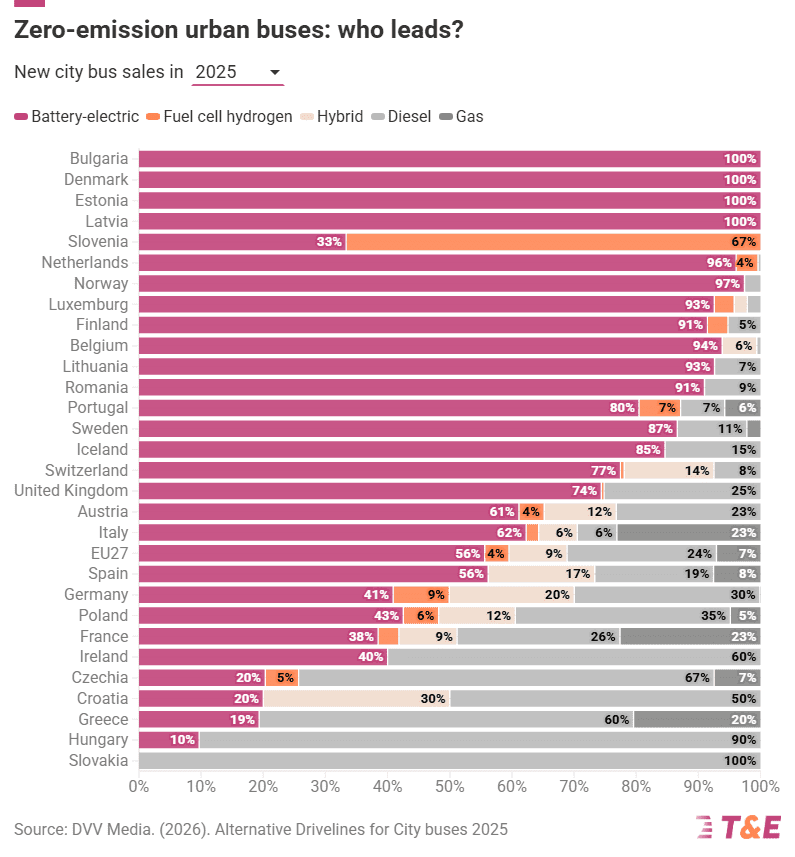
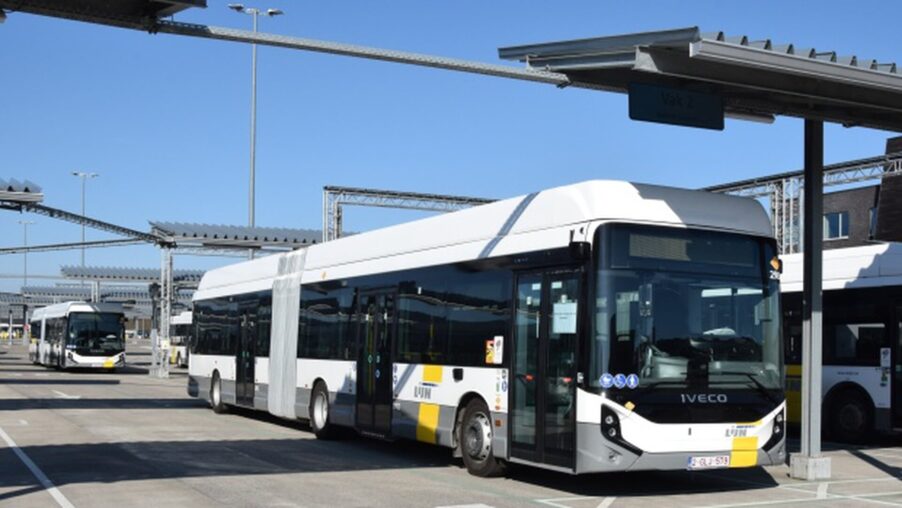
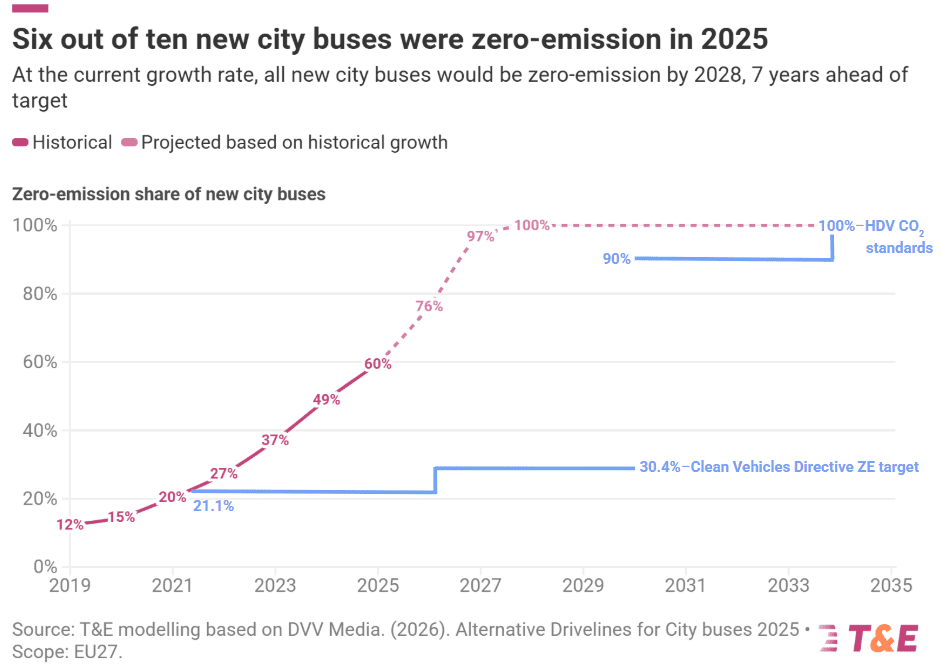
Six out of ten new city buses registered in the European Union in 2025 were zero-emission vehicles, with battery-electric buses representing 56% and fuel cell buses 4% of the market, according to data released by Transport & Environment. In 2019, when the Clean Vehicles Directive (CVD) was adopted, electric buses held a 12% share of the market. According to the organization, 100 % zero emission city bus market is achievable by 2028.
Five EU Member States recorded 100% zero-emission shares in new city bus sales in 2025: Bulgaria, Denmark, Estonia, Latvia and Slovenia. A further six countries exceeded a 90% ZE share: the Netherlands, Luxembourg, Finland, Belgium, Lithuania and Romania, reads the report authored by Principal researcher on Commercial vehicles Max Mollière.
Based on data by ACEA, electric buses accounted for nearly one quarter of all new bus and coach registrations in the European Union in 2025.
How soon will the remaining 40% go zero-emission? If the growth rate observed in 2023–25 persists, we could reach 100% ZE city buses by 2028, seven years ahead of the 2035 target. However, past growth was driven by frontrunners powering ahead, with leading cities setting targets to fully electrify their fleets. Now, future ramp-up will come from countries which have so far lagged behind.
Transport & Environment
Zero emission bus market in 2025, UK is first
Among major markets with more than 1,000 new city bus registrations annually, the United Kingdom ranked first (where zero-emission buses exceed 2,500 units), with electric powertrains accounting for approximately 75% of new city buses. Italy followed, with nearly two-thirds of new city buses classified as zero-emission, making it the only large EU market above the EU average. Spain recorded a 56% ZE share, compared with 57% in 2024. Germany reported a 50% ZE share, while France stood at 42%.
What about cumulative data from 2021?
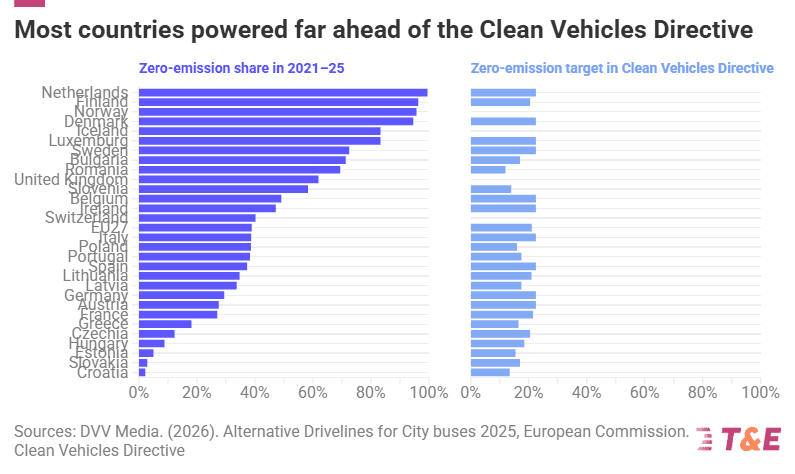
Cumulative sales data since 2021 show that nearly all Member States met the zero-emission procurement targets set under the first phase of the Clean Vehicles Directive, which covered the period from August 2, 2021 to December 31, 2025. National targets ranged from at least 13.5% in Croatia to 22.5% in most Member States.
Across the EU, two out of five new city buses sold since 2021 have been zero-emission, compared with an average ZE target of 21.5% under the Directive’s first phase. In the Netherlands, 99.5% of new city buses registered since 2021 were zero-emission, exceeding its 22.5% target.
Five countries may not have reached their CVD zero-emission bus targets based on registration data: Czechia, Hungary, Estonia, Slovakia and Croatia. In Hungary, the ZE share remained at 10% in 2025, unchanged from 2022 levels. In Czechia, zero-emission buses represented 26% of new city bus sales in 2025. Estonia recorded 84% battery-electric sales in 2024 and 100% in 2025.
Germany accounted for 62% of all fuel cell city buses sold in the EU
Battery-electric buses have increased their annual market share each year since 2020, gaining more percentage points annually than in the preceding year. As mentioned, in 2025, battery-electric buses accounted for 56% of new EU city bus registrations.
Fuel cell buses represented 4% of the market in 2025, up from 3% in 2024. Germany accounted for 62% of all fuel cell city buses sold in the EU, where hydrogen buses represented nearly 10% of new city bus sales.
The upcoming ZE bus targets set under the CO2 standards, which apply to manufacturers rather than countries, will be key to ensuring trailing markets electrify too. The CO2 standards also include emissions reduction targets for intercity buses and coaches, ensuring longer-distance models follow the trail blazed by their urban counterparts.
Transport & Environment
Other alternative powertrains declined in market share in 2025. Hybrid buses accounted for 9% of new city bus sales, down from 16% in 2024 and 22% in 2023. Gas-powered buses represented 7% of the EU market in 2025, compared with double that share in 2024. In Italy and France, gas buses accounted for 23% of new city bus sales.
The forthcoming zero-emission targets under the EU CO₂ standards for heavy-duty vehicles apply directly to manufacturers and include requirements for city buses, intercity buses and coaches. The second phase of the Clean Vehicles Directive introduces a 90% zero-emission procurement target for 2030.
“If the growth rate observed in 2023–25 persists, we could reach 100% ZE city buses by 2028, seven years ahead of the 2035 target,” said Max Molliere, Principal Data Analyst, E-Mobility at Transport & Environment.
“Six out of ten new EU city buses were zero-emission in 2025,” Molliere added. “Back in 2019 when the Clean Vehicles Directive was first adopted, electric buses stood at a mere 12% of the market.”
Source link by Sustainable Bus
Author Editorial staff
#Zeroemission #buses #reach #city #bus #market